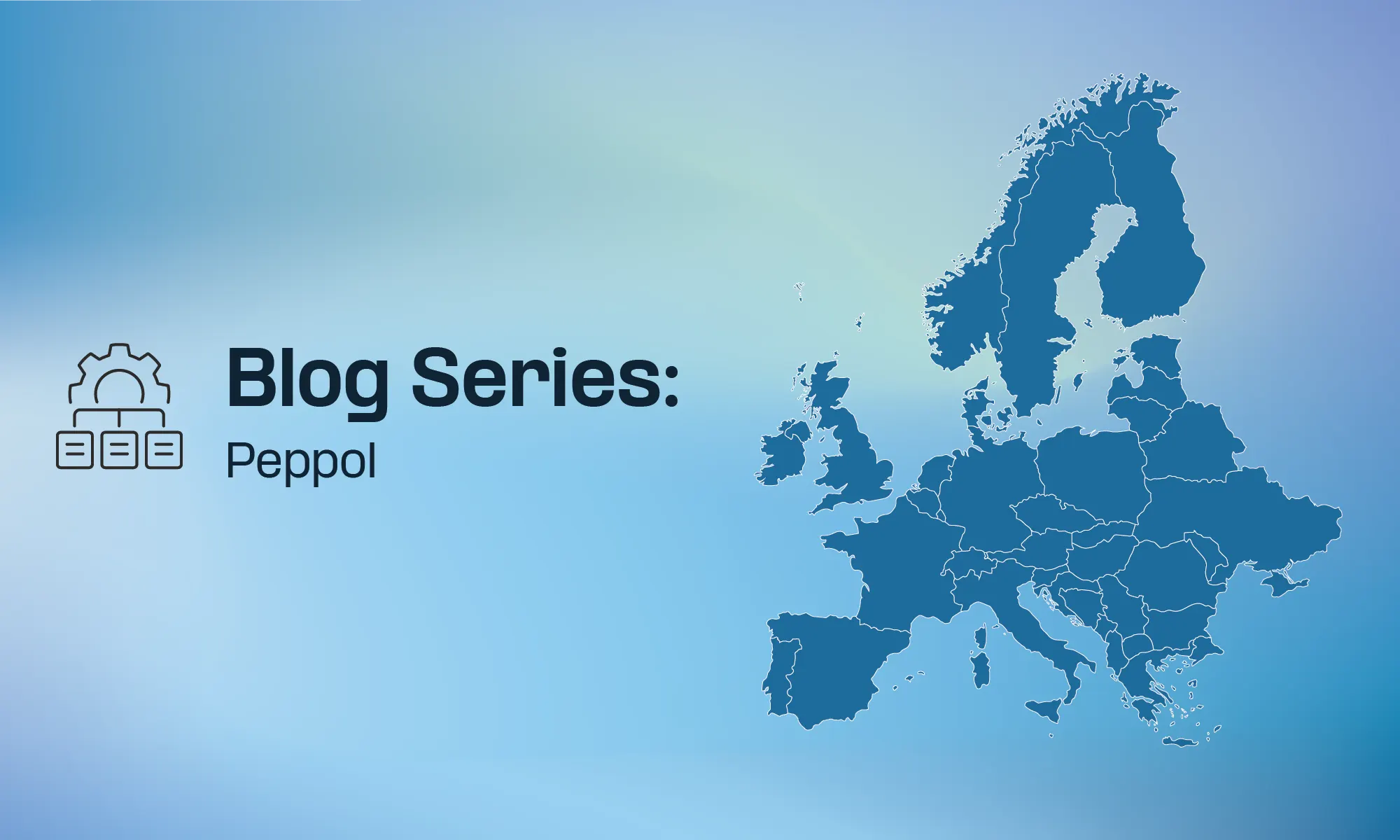

Peppol was born in Europe, and Europe remains its most advanced landscape. What started as a public procurement initiative has evolved into a continent-wide e-invoicing transformation, one now driven by national mandates, EU-level regulation, and the ambition to create a truly unified digital trade infrastructure by 2030.
The European e-invoicing landscape today
The Peppol network now counts 1.4 million companies registered globally, with 20 countries holding their own Peppol Authority. The majority of those authorities are European, and the maturity of adoption varies considerably across the continent, from the Nordics, who have been on Peppol for over a decade, to markets like France, Belgium and Germany, which are entering Peppol alongside their mandates.
What unites them is a shared regulatory direction: the EU's VAT in the Digital Age (ViDA) directive, which sets July 1, 2030 as the deadline by which all intra-EU B2B and B2G invoices must be issued as structured e-invoices using the EN 16931 format, with Peppol being one of the ways to comply. National mandates are accelerating ahead of that date, with multiple countries adapting the Peppol framework to its own compliance architecture.
Peppol adoption in Belgium: A mandate-driven success story
Belgium's transition to mandatory B2B e-invoicing offers the clearest picture of what structured, deadline-driven Peppol adoption looks like at scale. From January 1, 2026, all taxable persons established in Belgium must issue and receive structured e-invoices for B2B transactions via the Peppol network.
Belgium's model relies on the 4-corner Peppol framework, where buyers and suppliers exchange invoices via certified Access Points, service providers that ensure every transaction meets strict security and compliance requirements.
Looking ahead, Belgium is set to deepen its Peppol integration further: from January 1, 2028, Belgium will add continuous transaction reporting possibly using the Peppol 5-corner model, mirroring the approach Singapore, UAE and Oman have taken with their CTC frameworks.
Peppol adoption in France: A national authority and a phased rollout
France is entering its most significant phase of Peppol adoption. France officially designated its tax authority, the DGFiP, as the national Peppol Authority in July 2025, ahead of its major B2B e-invoicing mandate scheduled for September 2026.
From September 2026, all businesses must be capable of receiving e-invoices electronically, while large enterprises with turnover above €1.5 billion and mid-sized businesses between €250 million and €1.5 billion must also issue e-invoices for all domestic B2B transactions. SMEs and micro-businesses follow in September 2027, completing the national rollout.
What makes France’s approach distinctive is the central role of certified private platforms (Plateformes Agréées, PAs) operating alongside public infrastructure. Businesses must exchange invoices through these accredited platforms, which are responsible not only for invoice transmission but also for extracting and reporting tax-relevant data to the authorities, creating a compliance layer that goes beyond simple document exchange and supports France’s broader VAT digitalisation goals.
Under the French mandate, PAs must ensure interoperability for the exchange of e-invoices across the ecosystem. While Peppol is not explicitly mandated by law, it is the standard interoperability framework envisaged by the reform. In practice, invoices are exchanged through the Peppol network, and lifecycle status messages are transmitted using CDAR messages in a Peppol-compatible format
Peppol adoption in Germany: Receiving and sending
Germany's rollout reflects a pragmatic, sequenced approach. All companies were required to be able to receive structured e-invoices, with Peppol being one of the options, from January 2025, with mandatory sending coming into effect from January 2027.
Public sector e-invoicing via the XRechnung format, which integrates with Peppol for interoperability, has been in place since 2020.
Germany's scale makes it one of the most consequential markets in the European rollout. As one of the EU's largest economies, full B2B adoption will substantially increase the volume of structured invoices flowing through the Peppol network and the practical interoperability benefits for businesses trading across borders.
Peppol adoption in the Nordics: Europe's most advanced market
The Nordic countries are the reference architecture for Peppol adoption in Europe. Each has operated mandatory B2G e-invoicing via Peppol for years, and each is now moving, at different speeds and with different models, toward extending that infrastructure to B2B.
Norway is moving fastest. On March 16, 2026, the Norwegian Ministry of Finance confirmed it will present legislation to mandate structured e-invoices for all B2B sales from January 1, 2027, accelerating the previous timeline by a full year, citing strong digital readiness in the business community.
The mandate will use EHF 3.0, which corresponds to Peppol BIS Billing 3.0, the same XML format already used for Norwegian public procurement invoices, and roughly half of Norway's estimated 140 million annual B2B and B2G invoices are already exchanged electronically via the Peppol network.
Sweden has required Peppol for all public procurement since 2019 and is actively investigating a B2B mandate. Potential outcomes by 2027 include recommendations for mandatory B2B e-invoicing and e-reporting of invoice data to Skatteverket, the Swedish Tax Agency.
Finland has similarly mandated B2G e-invoicing and sees strong voluntary B2B adoption. All four Nordic countries have incorporated e-invoicing within B2B, B2G, and G2B transactions to varying degrees, and through the Nordic Smart Government & Business initiative, the region is working toward a shared real-time economy where structured business data flows automatically across borders, with a roadmap targeting 2027 for the majority of Nordic invoices to be digital and machine-readable.
Peppol adoption across the broader EU: A continent in motion
Beyond the headline mandates, a significant number of EU member states already have Peppol-based B2G infrastructure in place and are at various stages of extending it to B2B.
The Netherlands has required Peppol for public sector e-invoicing for years. For B2B transactions, structured e-invoicing is voluntary but Peppol adoption is widespread, making the Netherlands one of the more mature e-invoicing environments in Europe. A four-phase implementation plan aligned with ViDA requirements has been announced, with a detailed timeline pending.
Ireland has mandated B2G e-invoicing via Peppol and is now moving toward a phased B2B rollout. Ireland's phased e-invoicing rollout starts from November 2028.
Slovakia has proposed a mandatory B2B/B2G e-invoicing framework from January 1, 2027, using a decentralised five-corner Peppol model with certified service providers.
Latvia has voluntary Peppol adoption underway from March 2026, with its B2B mandate deferred to January 2028. Electronic invoices must be in XML format and comply with the Peppol BIS Billing 3.0 standard.
The ViDA framework: Connecting compliance to cross-border trade
The national mandates of 2026 are not isolated efforts. They are the near-term expression of a longer structural shift: the EU's ViDA initiative aims to standardise VAT reporting and e-invoicing across all member states, eliminating fragmented, country-by-country compliance architectures.
By developing Continuous Transaction Control specifications within the Peppol framework, member states can use the same network and message standards for both e-invoicing and tax reporting, avoiding the need for separate, fragmented systems. This convergence is significant: it means businesses that invest in Peppol connectivity today are not just solving a compliance problem in one market, they are building infrastructure that scales across the entire EU and increasingly connects to APAC and beyond through the PINT (Peppol International Invoicing Model) initiative.
The future of Peppol in Europe: From compliance to strategic infrastructure
Europe is moving through the most concentrated period of Peppol mandate activity in the network's history. With Belgium, France, and Germany going live, which means the network effect of structured e-invoicing is accelerating rapidly.
By 2030, Peppol is expected to be one of the default infrastructures for B2B invoice exchange across the EU. Businesses that treat this as a compliance checkbox risk being repeatedly disrupted by each new national deadline. Those that approach it as a connectivity investment, standardising on certified Access Point providers, aligning their ERP and billing systems to EN 16931, and building for cross-border interoperability will be positioned to operate more efficiently in an increasingly digital European market.
As an accredited OpenPeppol Access Point and Service Metadata Publisher provider, Fonoa supports businesses through this transition enabling seamless integration into the Peppol network and helping organisations navigate compliance requirements across multiple European jurisdictions from a single connected platform.