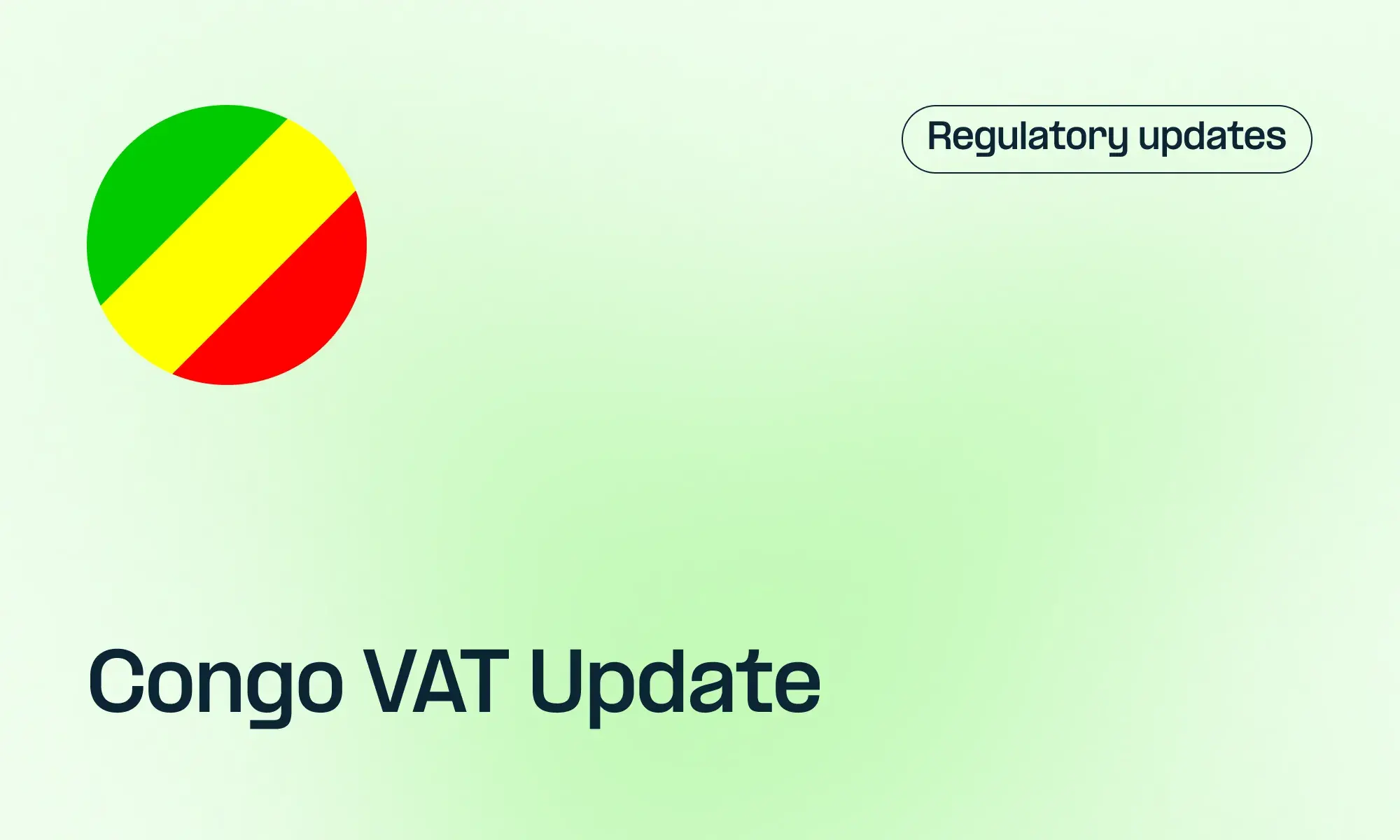

The Republic of the Congo has introduced a simplified VAT compliance regime for non-resident suppliers of digital services. From 1 July 2026, affected suppliers and platforms must register through the ARPCE portal and account for 18% VAT on in-scope supplies to customers located in Congo.
When do the Republic of the Congo's new VAT rules take effect?
The legal basis was introduced by the 2024 Finance Law, with the simplified registration and compliance regime becoming applicable from 1 July 2026.
How does the Republic of the Congo's new VAT regime affect digital service providers?
Expansion of VAT to digital services
The rules extend Congo's VAT framework to non-resident digital service providers and digital platforms supplying customers in the country. In practical terms, this means foreign suppliers must charge, collect and remit VAT on taxable digital services, even if they have no physical presence in Congo.
Which digital services are subject to VAT?
The following digital services are expressly covered by the regime:
- Online advertising and promotion.
- SaaS, PaaS, IaaS, software licensing and maintenance.
- Online marketplaces and intermediation platforms.
- Streaming, digital content, e-books, music, games and films.
- Cloud storage, hosting and domain services.
- Online learning and virtual events.
- Paid social media, messaging, VoIP and conferencing services.
- Business productivity tools, CRM, accounting, HR, project management and e-signature tools.
- Fintech platform and digital wallet services, unless treated as exempt financial services.
Does the VAT regime apply to both B2B and B2C supplies?
The regime applies to both B2C and B2B transactions, including supplies to final consumers and business customers.
VAT registration requirements for non-resident suppliers
There is no turnover threshold, meaning non-resident suppliers must register from the first taxable transaction with a customer located in the Republic of the Congo.
Marketplace and deemed supplier rules
Marketplace operators are also in scope and may be treated as deemed suppliers. They are required to account for VAT both on the underlying goods or services sold through the platform and on their own commissions or intermediation fees, where the platform operator, seller or buyer is located in Congo at the time the transaction is completed.
What should businesses do before 1 July 2026?
Businesses supplying digital services or operating digital platforms with customers in the Republic of the Congo should assess their VAT obligations before 1 July 2026. The new regime introduces direct compliance obligations for non-resident suppliers, including VAT registration, tax collection, quarterly reporting and remittance
Frequently asked questions about the Republic of the Congo's digital services VAT rules
What VAT rate applies to digital services in the Republic of the Congo?
From 1 July 2026, non-resident suppliers must charge 18% VAT on taxable digital services supplied to customers located in the Republic of the Congo.
How can non-resident businesses register for VAT in the Republic of the Congo?
Non-resident suppliers must register through the ARPCE online portal. Once registered, they are responsible for charging, collecting, reporting and remitting VAT under the simplified compliance regime.
Does the Republic of the Congo's VAT regime apply to businesses with no physical presence?
Yes. The regime applies to non-resident suppliers of in-scope digital services, even if they have no physical presence in the Republic of the Congo.
How is a customer's location determined for VAT purposes?
The legislation applies to digital services supplied to customers located in the Republic of the Congo. For VAT purposes, a customer is considered to be located in the Republic of the Congo if they are in Congolese territory at the time the digital service is supplied. The supplier must determine the customer's location using available evidence, such as account profile information, geolocation data, the IP address, payment details, or other commercially available verification data.
Are digital marketplaces responsible for collecting VAT?
Yes. Marketplace operators may be treated as deemed suppliers and can be responsible for accounting for VAT on certain transactions completed through their platforms, depending on how the rules apply.
Which businesses are affected by the Republic of the Congo's digital services VAT rules?
The rules apply to non-resident businesses supplying digital services to customers in the Republic of the Congo, including SaaS providers, software vendors, cloud service providers, streaming platforms, online marketplaces, online learning providers and other digital platforms.
How can businesses prepare for the Republic of the Congo's new VAT rules?
Businesses should review whether their services fall within scope, determine whether they need to register for VAT, update their tax calculation processes, and ensure they can meet ongoing VAT reporting and payment obligations from 1 July 2026.