

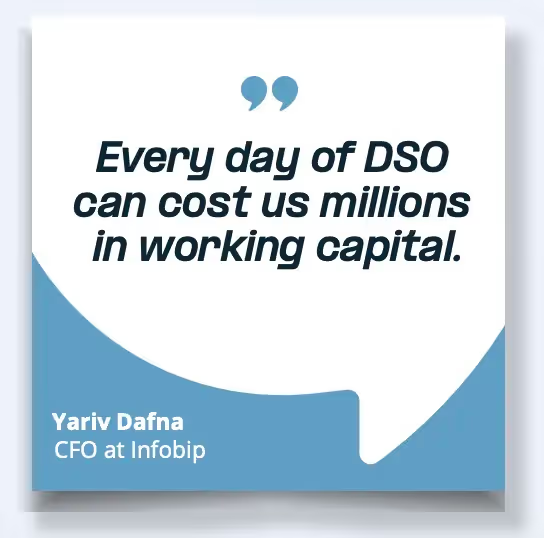
Tax automation transforms how tax teams operate. It eliminates manual work, reduces risk, and gives the C-suite visibility they've never had before. For the business, it means faster launches, better margins, and improved cash flow with fewer days sales outstanding (DSO).
So why do so many automation projects get deprioritized?
Not because they're unnecessary. Because they're framed wrong.
The compliance trap
Most tax automation pitches lead with compliance. Upcoming e-invoicing mandates. Regulatory deadlines. Audit risk.
These are real concerns. But when you frame automation as a compliance necessity, you're essentially asking leadership to spend money to avoid something bad happening. That's a hard sell when budgets are tight and every team is competing for resources.
Compliance-focused pitches also tend to be qualitative. "We need this to stay compliant" doesn't translate into dollars. And there's a gap between risks existing and risks materializing that matters to business leaders weighing priorities.
The result? Your proposal gets added to the backlog. It's important, but not urgent. Not strategic. Not now.
What wins instead: a strategic story
The business cases that actually get approved do something different. They connect tax automation to what the company is already trying to achieve.
That might be global expansion. Margin optimization. IPO readiness. A major product launch. Digital transformation.
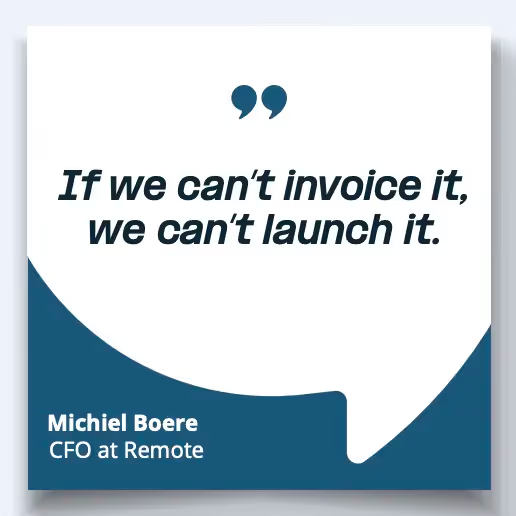
When you position tax automation as an enabler of those goals—not just a compliance checkbox—you shift the conversation entirely.
Instead of "we need this to avoid penalties," you're saying "we can't launch in Germany without compliant invoicing" or "this will cut five days off our invoice cycle and unlock working capital."
That's a story leadership wants to hear.

Three shifts to make your case stick
1. Start with the company's goals, not the tax team's problems
Before you build your pitch, look at what the business is already aiming for. Check strategic plans, board communications, OKRs, CEO briefings. Find the initiative your automation project can accelerate or de-risk.
2. Quantify in business terms
Translate tax outcomes into metrics that matter outside your function:
- Days Sales Outstanding (DSO) impact
- Time-to-market for new regions
- FTEs avoided as transaction volume scales
- Cash flow improvements from faster invoicing
These connect directly to P&L and balance sheet conversations happening at the executive level.
3. Build cross-functional allies first
Your CFO will ask what engineering thinks. What finance thinks. What product thinks. If you haven't aligned with those teams before your pitch, you're walking in without backup.
Each team cares about different outcomes. Engineering wants fewer support tickets and no manual rule updates. Finance wants cost control and audit protection. Map the benefits through each lens before you present.
The bottom line
Tax automation is a growth lever. But only if you pitch it that way.
The projects that win budget aren't the ones with the longest list of compliance requirements. They're the ones that tell a strategic story—connecting automation to company priorities, cross-functional value, and measurable business impact.
Your tax function isn't a cost center. It's a growth enabler. Your business case should prove it.
Want help creating your business case? Get in touch with our team, who work with indirect tax teams to demonstrate the value of automation in terms that resonate with the C-suite.