
Before you can make the case for tax automation, you need to understand where your current processes are breaking down. Not in vague terms—specifically. Which handoffs introduce risk? Where does manual work pile up? What's costing you time, money, or market access?
That requires a map.
At Fonoa, we use a framework called the Happy Path to visualize the entire indirect tax lifecycle. It traces the journey from the moment a transaction occurs to when data gets reported to governments. When the path flows smoothly, tax enables business speed. When it breaks, it creates drag.
Here's how to use it.
Why you need a framework
Tax isn't a single step. It's a chain of interconnected processes that must run accurately across regions, systems, and teams. A problem at one stage cascades downstream.
Most tax teams know where their pain points are. But without a structured way to evaluate each stage, it's hard to prioritize. And it's even harder to explain to leadership why automation matters—or where to start.
The Happy Path gives you a diagnostic tool. You can assess performance at each stage, identify where things break, and connect those breakdowns to business impact. That's what turns a vague sense of "we need better systems" into a concrete, fundable proposal.
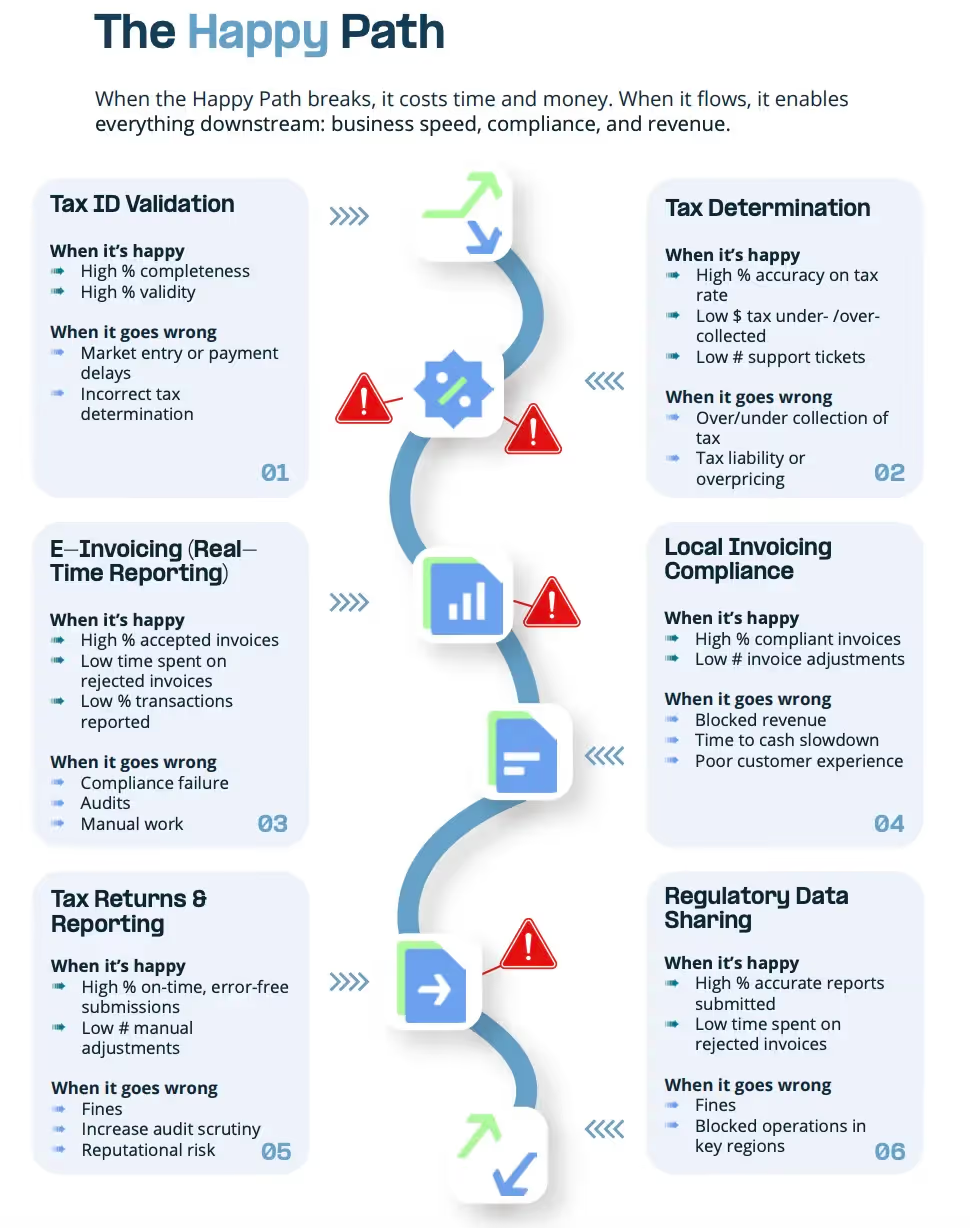
The six stages of indirect tax
1. Tax ID validation
This is where compliance starts. You need to verify that your customers' tax IDs are valid before you can invoice them correctly.
When it's working: High completeness rates, high validity rates, clean data flowing downstream.
When it breaks: Market entry delays, payment holds, incorrect tax determination that compounds through the entire chain.
2. Tax determination
Getting the tax rate right for every transaction, across every jurisdiction, for every product type.
When it's working: High accuracy on tax rates, minimal under- or over-collection, few support tickets from confused customers.
When it breaks: You're either overcharging customers (pricing yourself out) or undercharging (creating liability). Either way, it's a problem.
3. Local invoicing compliance
Every market has different invoicing requirements. Formats, fields, languages, legal text. Getting it wrong means invoices get rejected.
When it's working: High percentage of compliant invoices, low adjustment volume, invoices accepted on first submission.
When it breaks: Blocked revenue, slower time-to-cash, poor customer experience, and your finance team stuck in remediation mode.
4. E-invoicing and real-time reporting
More countries now require tax authorities to receive transaction data in real time. This isn't optional—it's a compliance gate.
When it's working: High acceptance rates, minimal time spent on rejections, transactions reported accurately and on time.
When it breaks: Compliance failures, audit triggers, and manual work to fix rejected submissions.
5. Tax returns and reporting
The periodic filings that reconcile what you've collected with what you owe.
When it's working: On-time, error-free submissions with minimal manual adjustments.
When it breaks: Fines, increased audit scrutiny, reputational risk, and finance teams scrambling at quarter-end.
6. Regulatory data sharing
Beyond tax returns, many jurisdictions now require additional reporting—DAC7 in the EU, similar frameworks in the UK, Canada, Australia, and elsewhere.
When it's working: Accurate reports submitted on time, no operational disruptions.
When it breaks: Fines, blocked operations in key regions, and a compliance burden that grows with every new mandate.
How to use this framework
Start by assessing your current state at each stage. Be honest about where things are working and where they're not.
For each stage, ask:
- What's our current process? Manual, semi-automated, fully automated?
- What's our error or rejection rate?
- How much time does this consume? Whose time?
- What happens downstream when this stage breaks?
- Can we quantify the cost in dollars, days, or headcount?
Once you've mapped your current state, you can identify which stages are creating the most drag. That tells you where automation will have the highest impact—and gives you the evidence to make the case.
From diagnosis to action
The Happy Path isn't just a diagnostic tool. It's also a way to show leadership what a more efficient future looks like.
When you can say "here's where we are, here's what it's costing us, and here's what good looks like," you've moved from complaining about problems to proposing solutions. That's a very different conversation.
Map your path. Find the breaks. Build your case from there.
Want help assessing your Happy Path? Our team can walk you through a diagnostic workshop tailored to your operations. Get in touch.