A product team’s guide to indirect tax
A practical guide for product and engineering teams deciding whether to build indirect tax infrastructure in-house or embed it, from tax ID validation and calculation to e-invoicing and filing
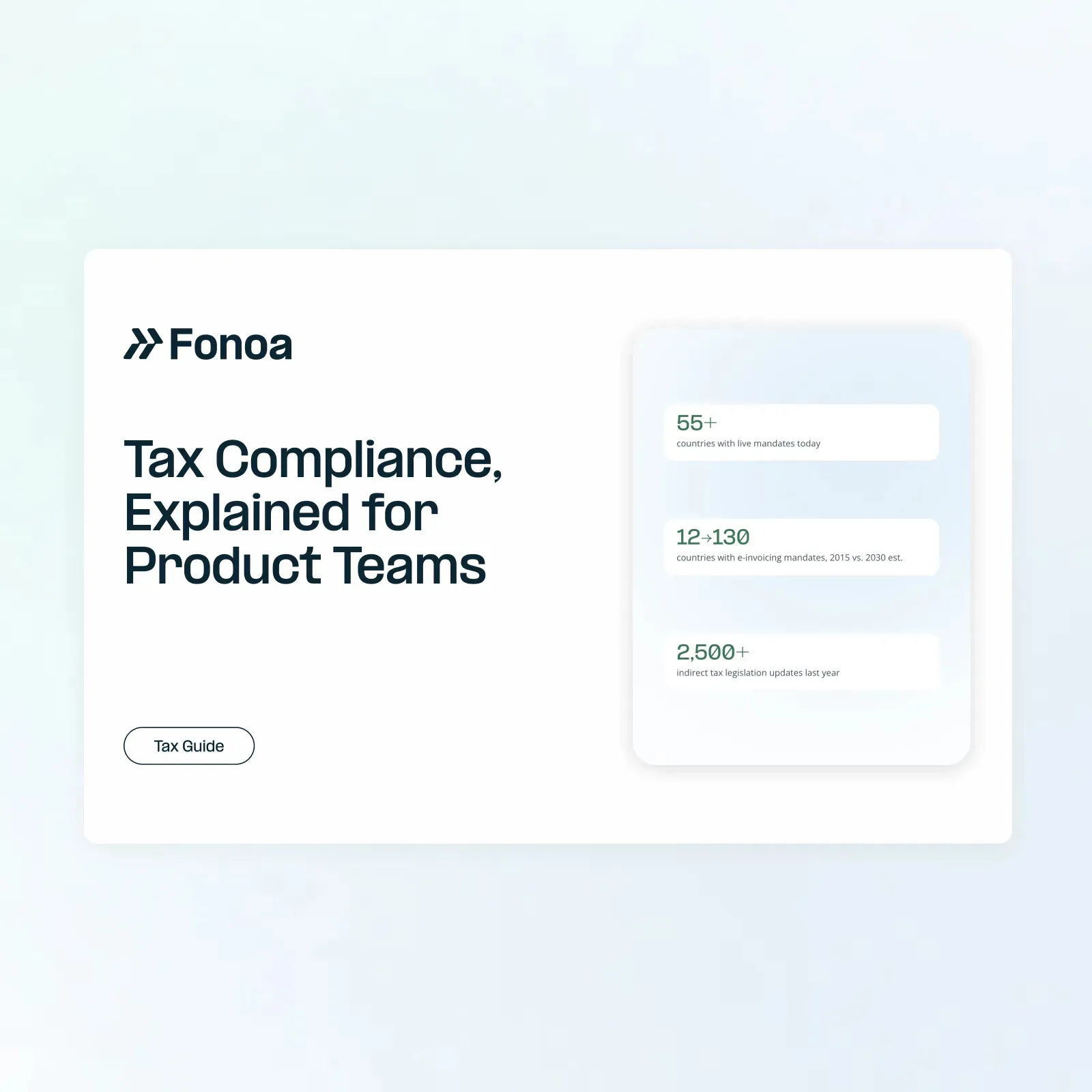
A field guide to the build vs. embed decision, written for the team that gets handed the ticket, not the tax department that wrote the requirement.
People rarely put "tax" on the roadmap on purpose
Tax compliance usually arrives disguised as something else: a new billing flow, a marketplace feature, an expansion into a market with different rules. By the time anyone names it as a tax problem, it's already a dependency with a deadline attached.
This guide is for the engineering and product leads who inherit that ticket. It breaks indirect tax down into the systems it actually touches, sizes up what's coming over the next two years, and lays out how to decide whether your team builds and maintains that infrastructure itself, or embeds a platform that does.
What you'll get from the guide
- The 4 stages where tax most matters within products: onboarding, billing, invoicing, filing
- A country-by-country look at e-invoicing mandates
- The embed vs. build rationale
- How Airwallex and Intuit, two very different companies, both landed on the same answer
What product teams need to know about indirect tax
Four connected systems, not four separate projects
Tax ID checks, tax calculation, e-invoicing, and filing sound like four tickets. They're really one pipeline: bad data at step one becomes a reconciliation problem at step four. The guide walks through what each stage requires and where teams typically get burned when they treat them as independent.
This isn't a backlog item that ever clears
Governments don't wait for a sprint to end. The guide includes the trajectory: single digits of countries with e-invoicing mandates a decade ago, well over a hundred projected by 2030, and thousands of legislative changes in the past year alone. It's less a project plan than a moving target.
There's a good chance a mandate already applies to you
More than 55 countries currently require real-time digital reporting in some form. The guide includes a snapshot of what's live now and what's phasing in next across Europe, the Gulf, APAC, and Latin America, so a team can check its own footprint against it rather than finding out from a rejected invoice.
The comparison that actually matters isn't cost. It's where engineering time goes.
Build it yourself and every new market adds to a list only your team monitors. Embed it and that monitoring, plus the audit trail, comes with the platform. The guide lays this out module by module, since most teams don't embed everything at once. They start wherever the immediate pressure is (onboarding, calculation, or invoicing) and expand from there.
How one hospitality platform picked a vendor, and what it got in return
Apaleo compared 8 e-invoicing vendors before choosing one, and the guide sets out the questions that separated the finalists from the rest: coverage of the markets that actually matter to you, onboarding through an API instead of a services project, and monitoring that catches a rule change before a customer does. The payoff for Apaleo: new markets live in about three weeks and roughly 1,000 developer hours back on the calendar every year.
Get the guide
If tax compliance just showed up on your roadmap, or has been sitting there half-scoped for a few sprints, this gives you a way to make the call, backed by how three companies actually made it.