

Why should tax teams rely on primary sources?
Most tax intelligence products give you an interpretation. A practitioner reads a new rule, writes a summary, and you read the summary. It is convenient, and for a quick sense of direction it is fine.
It is also someone else's reading, one step removed from the text that actually binds you. And that one step matters more than it looks.
Can you defend your tax position in an audit?
Here is the practical test. A tax authority asks why you treated a transaction the way you did. Can you point to the rule you relied on, the actual legislation, with the effective date, in the original source?
A practitioner summary does not pass that test on its own. It is evidence of what someone thought the rule meant, not evidence of the rule. So in practice you go back to the primary source anyway, at the worst time, under pressure, to reconstruct what you should have had on file from the start.
Why general AI can't be trusted for tax research
General AI tools make this worse, not better. Ask a general model about a recent tax change and it can produce a confident, fluent answer that is simply wrong, a rule that was proposed but never passed, or one invented outright. There is no source to check because there was no source. In a compliance context that is not a small flaw. It is disqualifying.
Start with the primary source, then add the interpretation
The fix is to change what comes first. Start with the primary source, the gazette entry or the directive, and layer the summary on top of it, not the other way around. Read the plain-language version to move fast, click through to the source to verify, keep the citation on file for the audit. Same speed, no leap of faith.
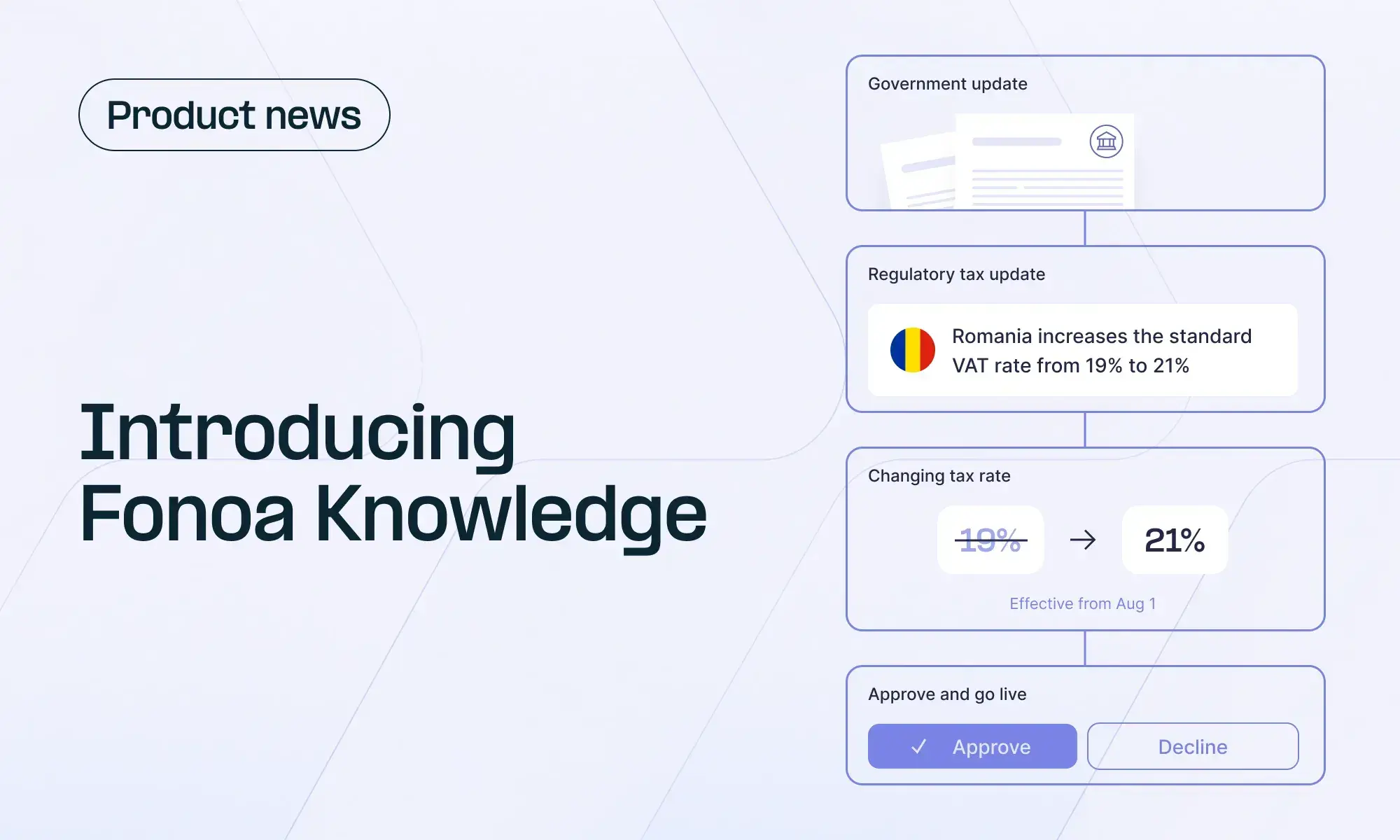
That is how Knowledge is built. Every alert carries the primary source it references. A confidence score grades each item so only high confidence changes surface, and when uncertainty exists it is disclosed rather than smoothed over. Proposals are labeled as proposals.
Why primary source attribution is the foundation of trustworthy tax intelligence
It sounds like a detail. It is the foundation. If you cannot trace an alert back to the text that created the obligation, you do not have intelligence you can act on. You have a tip. Starting from the source is what turns a tip into something you can put in front of an auditor without flinching.
An alert without a source is a guess. Every Fonoa Knowledge alert carries one. See it for yourself. Get a Knowledge demo.






.jpg)