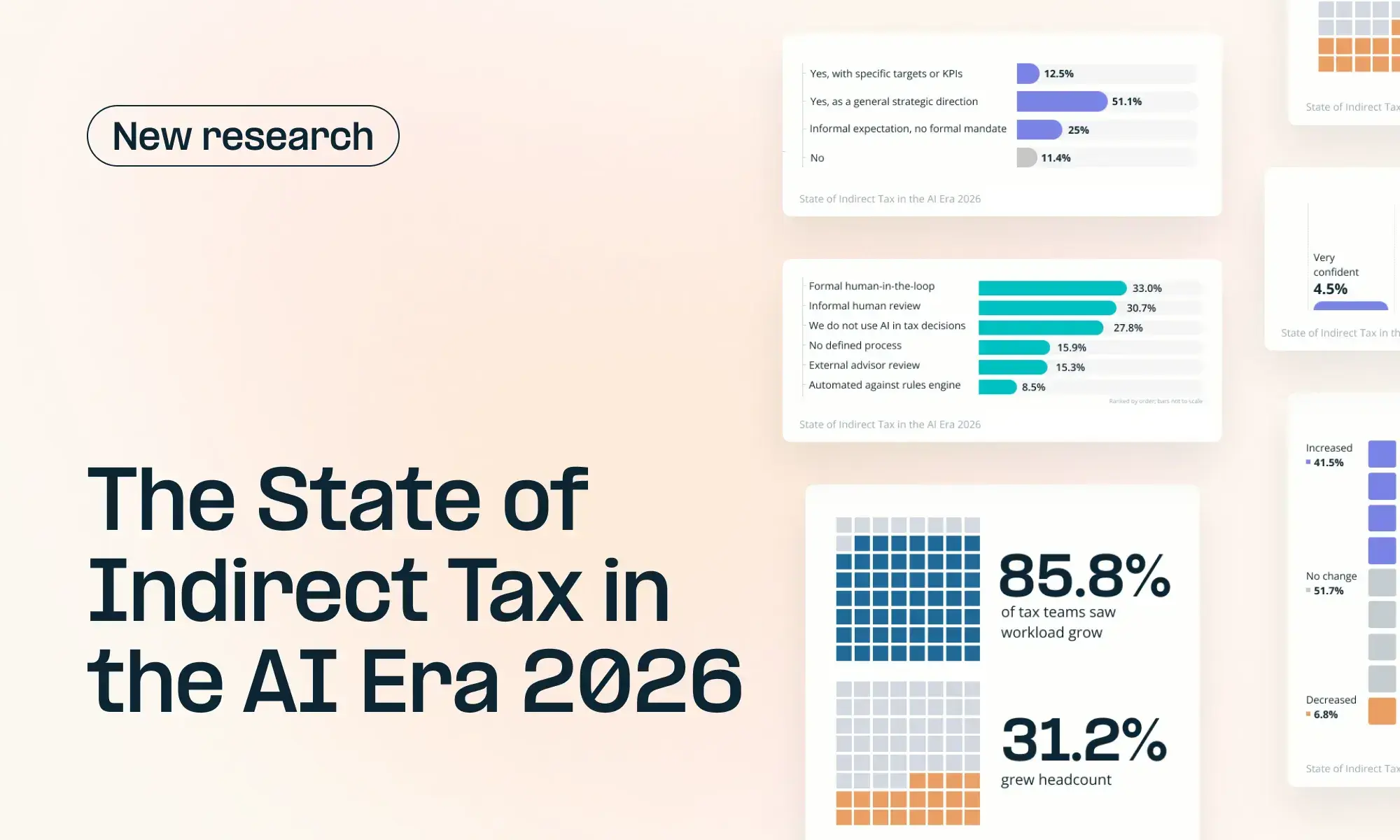
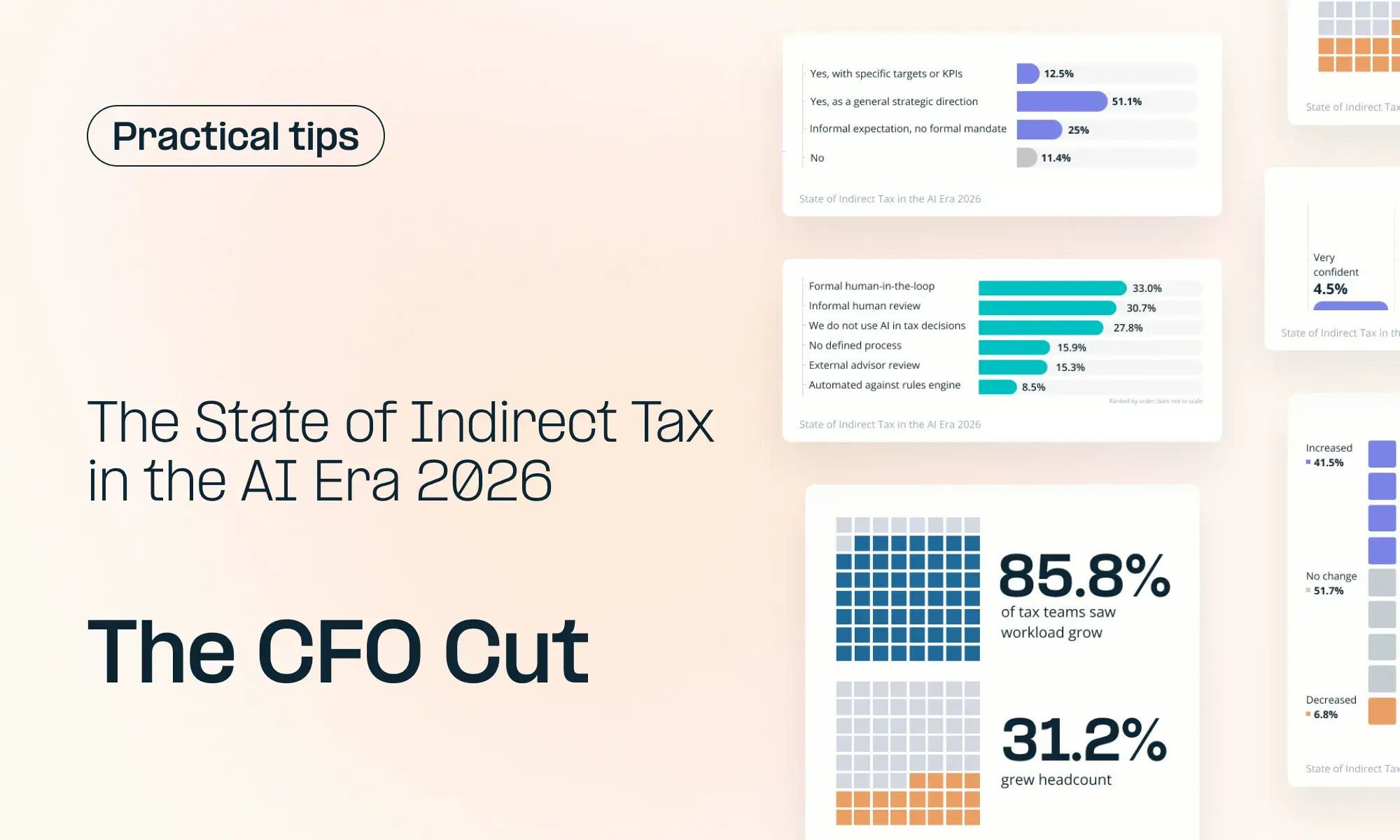

We surveyed 176 tax and finance leaders for the State of Indirect Tax in the AI Era 2026. Here's the finance cut: what the 18 CFOs and finance directors in our sample said, where their view differs from their tax leaders, and three things the data points to.
Note: It’s a subgroup of the full report, so read the CFO figures as directional.
The mandate is set. The target often isn't.
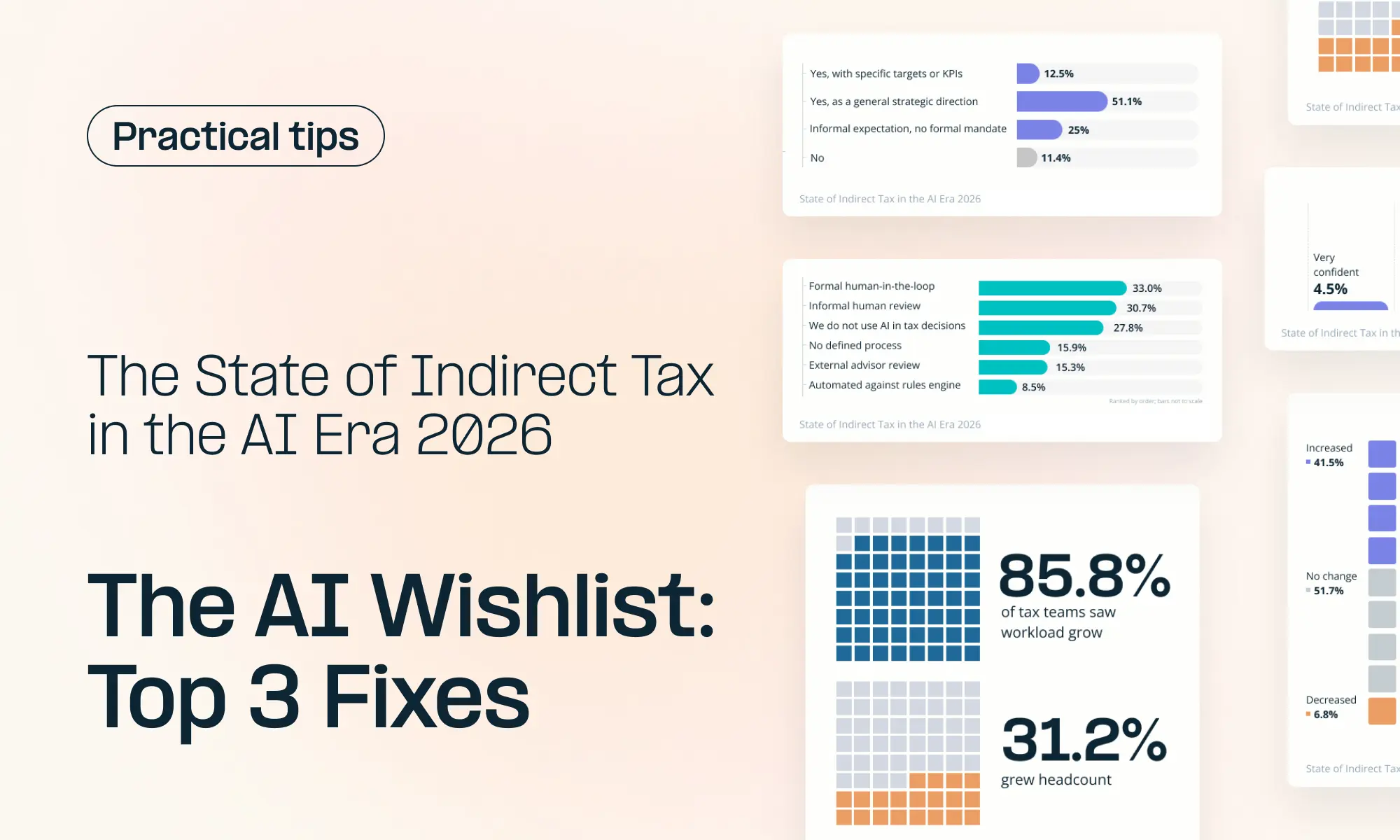
88.6% of tax functions are under leadership pressure to adopt AI. Only 12.5% have a specific target or KPI to work toward.
For most teams, "adopt AI" has gone out as a strategic direction without a clear definition of success attached. That gap is worth closing, because specificity is the single biggest differentiator in the data: when leadership sets a real AI target, the function measures the right things and is far more likely to see results. The lever here sits with finance, and it costs nothing but clarity.
CFO takeaway: Give the tax function one measurable AI target this quarter (time saved, cost avoided, or cycle time on a named workflow).
Finance and tax leaders see the risk differently
CFOs are nearly 3x more likely than heads of tax to name regulatory monitoring as the top pressure (22.2% vs 8.2%).
In the other direction, heads of tax are nearly 3x more likely than CFOs to name e-invoicing compliance as the top pressure (14.3% vs 5.6%), and tax managers 4x more likely (22.4%).
Finance leaders tend to worry more about regulatory change. The people running the workflows worry more about e-invoicing. The likeliest explanation isn't that one group is right and the other wrong, it's that they're describing the same threat in different vocabulary. Real-time reporting and e-invoicing mandates are the single biggest driver of regulatory-monitoring burden right now. So when CFOs flag regulatory change and tax leaders flag e-invoicing, they may be naming the cause and the symptom of one problem, and the function ends up under-resourcing it because nobody connects the two. It's also possible finance is correctly weighting a strategic, cross-jurisdiction risk while tax weights the operational pain, in which case both reads are right and worth funding.
CFO takeaway: Ask your head of tax whether the regulatory-monitoring load you're worried about is mostly e-invoicing and real-time reporting. If it is, fund it as one priority, not two.
Most AI in the function isn't yet defensible
92% of organizations use AI. 60.8% rely mainly on individuals using public tools with no governance or audit trail. 57.4% would not be confident defending an AI-assisted decision to a tax authority today.
This reads as a financial exposure more than a technology problem. A tax authority doesn't ask for a model accuracy score. It asks which rule was active, who reviewed the output, and what the approval process was. Those are records, and informal adoption doesn't generate them.
Finance leaders clearly see what would help. Asked what would most unlock production AI, 55.6% of CFOs chose audit-defensibility and explainability, and 38.9% chose better integration with existing tax systems and data. Not flashier AI. AI you can stand behind, connected to the systems already in place.
CFO takeaway: Before approving any AI spend in tax, ask whether it produces an audit trail you could hand to a tax authority.
Three things the data points to
Set a specific AI target rather than a general direction. Check with tax leaders on where the workload is actually building, since their view on global trends like e-invoicing runs ahead of finance's. And treat audit-defensibility as a requirement, because it's both the largest exposure and, in CFOs' own words, the thing most likely to unlock production AI.
None of this argues for slowing down. 73.9% of organizations haven't slowed AI adoption, and that's the right instinct. The opportunity is to add the structure that turns adoption into measurable return.
CFO takeaway: Run the report's five-question diagnostic with your tax leader and fund the gaps it surfaces.
The full report includes that diagnostic, ready to run against your own function. If you're being asked to fund AI in tax, it's a useful way to see what you're buying.
.webp)